日本語の後に英語版が続きます。 English follows below.
仕立てる男の教養|VESTA by John Ford
文・北川美雪|VESTA by John Ford ジェネラルマネージャー
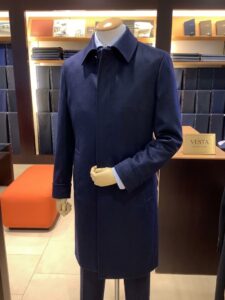
コートの袖口を選ぶなら、まず「何の上に着て、どこへ行くか」を考えてみてください。通勤や会食でスーツに重ねるチェスターには、端正な本切羽。風のある街を歩くトレンチやステンカラーには、袖口を調整できるタブ。英国調のポロコートやダブルチェスターに手元の奥行きを加えたいなら、折り返しのあるターンナップカフが候補です。
襟と着丈は、離れたところからでも目に入ります。袖口が印象に残るのは、車のドアを開けるときや、会食の席でコートを脱ぐとき。動いたときに見える小さな部分だからこそ、その方らしさが出ます。銀座のテーラー、VESTA by John Fordが、過去記事で紹介した3種類を、歴史と生地の相性から掘り下げます。
| 袖口 | 構造・見え方 | おすすめの着方 | 合わせやすい生地 |
|---|---|---|---|
| タブ | 袖口近くに帯状のパーツ。調整式なら開きを絞れる | トレンチやステンカラーで街をよく歩く方 | コットンギャバジン、適度にハリのあるウール |
| 本切羽 | 開きとボタン穴があり、実際に開閉できる | スーツに重ねるチェスターで端正な手元を好む方 | 表面のなめらかなウール、厚みを抑えたカシミヤ |
| ターンナップ | 折り返し状の帯が袖を一周し、横に陰影が出る | ポロコートやダブルチェスターに英国調の趣を添えたい方 | 中肉のウール、輪郭が出るツイード、厚みを吟味したカシミヤ |
1.タブ|風のある日に役立つ、トレンチの機能美

タブは、袖口の少し上に付く帯状のパーツです。ボタンを留め替えたりバックルで締めたりできる仕様なら、袖口の開きを狭めて風の入り込みを抑えられます。固定された飾りタブなら、手元にアクセントを添える役割です。オーダーの際には、どこまで絞れるのか、手袋をしたまま操作できるかまで確かめておくと、用途に合う一着になります。
タブの成り立ちを理解する手がかりが、英国のトレンチコートです。バーバリーの公式資料では、ギャバジンを使った全天候型のコートの系譜と、ベルト付きの袖口が初期の機能的な意匠を受け継いでいることが紹介されています。風雨から身を守るための工夫が、いまもトレンチらしい表情をつくっています。バーバリー公式|トレンチコートの歴史 / ベルテッドカフの解説
どんな方におすすめ? 駅までの道をよく歩く方や、仕事と休日で同じコートを着る方。肩や胸がすっきりしたステンカラーなら、袖口のタブがほどよいアクセントになります。すでに前身頃にベルトや大きなポケットがある場合は、袖タブを細めにすると全身がまとまります。
どんな生地におすすめ? コットンギャバジンは帯の輪郭が出やすく、トレンチの機能的な意匠と好相性です。目の詰まったウールなら、冬のステンカラーにも取り入れやすくなります。柔らかく毛足のあるカシミヤで仕立てるなら、タブの付け根や折り重なる部分の厚み、開閉したときの生地への負担を見ながら、幅や留め具を選びます。
2.本切羽|チェスターの袖に、端正な縦の線を

本切羽(ほんせっぱ)は、袖口に開きを設け、ボタンを実際に通せる穴を作る仕立てです。ボタンを留めると袖の線がすっきりとつながり、外すと開きの構造が分かります。袖口のボタンを少し重ねて並べる「重ねボタン」は、ボタンの配置のこと。本切羽かどうかは開閉で決まり、4個重ねかどうかは個数と並べ方で決まります。 本切羽でボタンを離して並べることもできます。
英語のテーラリングでは、開閉する袖ボタンを working buttonholes といい、surgeon’s cuffs と呼ぶこともあります。医師が上着の袖をまくるために用いたという話が、テーラーの間では呼び名の由来として語られています。サヴィル・ロウ・ビスポーク協会の資料には、袖の開きと手縫いのボタン穴が、現代に受け継がれるビスポークの工程として記録されています。医師の話は伝承として捉え、目の前のコートでは開きと穴の作りに注目してみてください。Savile Row Bespoke Association|The Bespoke Process / Bespoke Edge|What are surgeon cuffs?
どんな方におすすめ? 仕事や会食でスーツを着ることが多く、チェスターコートの手元まできちんと整えたい方。VESTAの過去記事でも、チェスターのオーダーで最も多い袖口として本切羽を紹介しています。ボタンを生地に近い色で揃えれば、控えめな仕上がりに。4個を寄せて並べると、手元を動かしたときに小さな起伏が見えます。着用時は全部留めるだけで、きれいにまとまります。VESTA|コートの袖口タイプの話
どんな生地におすすめ? なめらかなウールや、袖口の厚みを抑えやすいカシミヤは、ボタン穴と開きの線がきれいに見えます。厚手の生地や毛足の長いものでは、ボタン穴周辺と袖の重なりがふくらみやすいため、穴の位置やボタンの大きさ、配置も含めて検討します。本切羽は袖先にボタン穴が残るので、後から袖先で丈を詰める場合は制約があります。よく着るジャケットを着て、袖丈を確認してから位置を決めるのがおすすめです。
3.ターンナップカフ|布の折り返しで見せる、英国調の奥行き

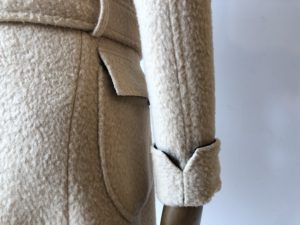
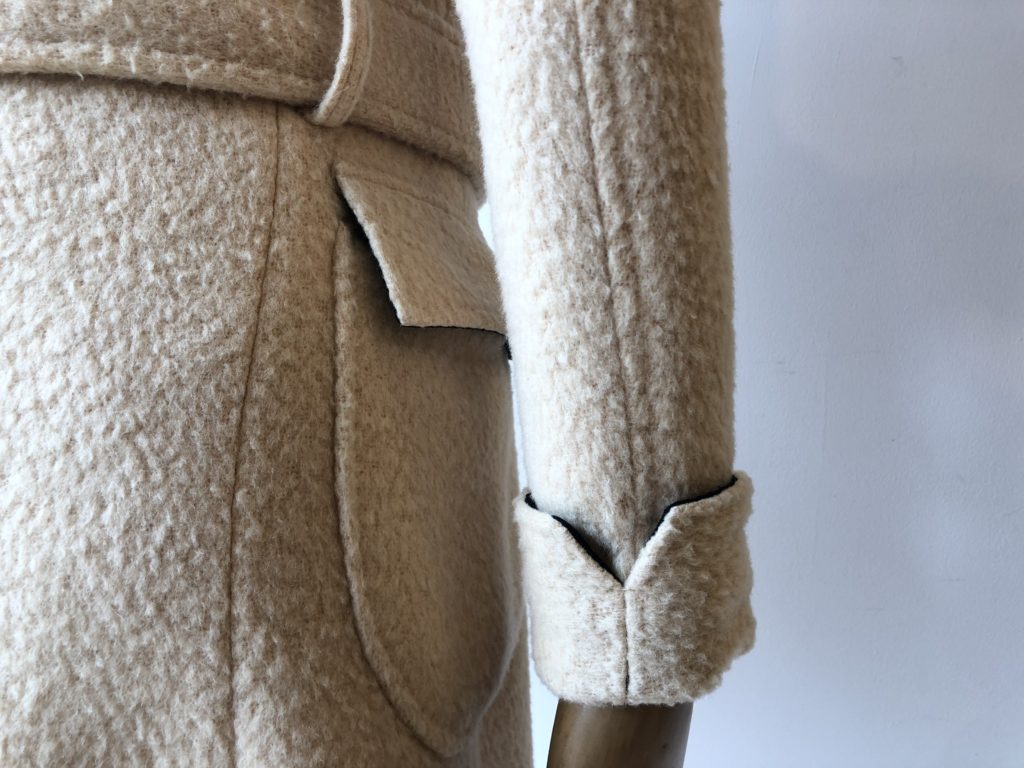
ターンナップカフ(ターンアップカフ、turn-back cuff)は、袖先に折り返したような帯を一周させる仕立てです。シャツのダブルカフスを思わせる形で、袖口の上に横の線が一本入ります。ボタンの艶や金具に頼らず、生地そのものに光と影が生まれるのが魅力です。帯の幅を狭めると控えめに、広くするとクラシックな存在感が出ます。
折り返した袖口には、長い服飾史があります。20世紀初頭の英国の服飾史家ウィルフレッド・マーク・ウェッブは、17世紀の上衣に見られた袖口の折り返しと、その形が固定された意匠として残った経緯を論じ、当時のオーバーコートにも見られたと記しています。今日のコートに取り入れるターンナップも、そうした折り返しの造形を味わえるクラシックな選択です。Wilfred Mark Webb|The Heritage of Dress / VESTA|コートの袖口タイプの話
どんな方におすすめ? 英国調のスタイルがお好きで、襟元のほかにもコートに表情を加えたい方。たっぷりした襟や着丈のあるポロコートなら、袖口にも適度な量感を持たせると釣り合います。ミッドナイトブルーのダブルチェスターなら、同じ色の布で控えめな折り返しを作るだけで、光を受けた手元に青みと陰影が見えてきます。
どんな生地におすすめ? 中肉でほどよい腰のあるウールなら、折り返しの輪郭を出しやすくなります。ツイードは織りの立体感が活きます。グレンチェックやヘリンボーンなら、袖と折り返しの柄をどこで合わせるかも見どころ。カシミヤなら、布を重ねた状態で袖口だけが厚く見えないか、折り返しの縁がきれいに出るかを確かめます。素材名が同じでも、目付や毛足で仕上がりは変わります。
カシミヤコートの袖口を、オーダーの際に試着でどう見る?
VESTAのコートのサイズ解説では、普段合わせるスーツやジャケットの上から着て、肩・袖丈・着丈のバランスを確認することをおすすめしています。袖口の仕様も、この順番で見ると選びやすくなります。VESTA|オーダーコートの正しいサイズ感
- 腕を下ろして全身を見る。 ジャケットの袖が自然に収まっているか、襟や前ボタンに対して袖口だけが強く見えないかを確かめます。
- 腕を前に出してみる。 鞄を持つ、車のハンドルに手を伸ばすといった動きで、袖口が引っかかったり、手首まわりが窮屈になったりしないかを見ます。タブを絞るなら手袋も試します。
- 生地を重ねて厚みと光を見る。 本切羽の開きやターンナップの折り返しは、布が重なります。生地見本を軽く折り、正面と斜めから見ると、袖口に出る厚みと艶を想像しやすくなります。
例えば、ミッドナイトブルーのカシミヤで初めてチェスターを仕立てるなら、普段スーツに合わせる方には、同系色のボタンを使った本切羽を。ダブルの風格とカシミヤの艶を楽しみたい方には、幅を抑えたターンナップも素敵です。逆に襟や前ボタンがすでに印象的なら、飾りのないプレーンな袖口にすると、生地の落ち感がよく見えます。
コートの袖口についてよくある質問
本切羽と4個重ねボタンは同じですか?
本切羽は袖ボタンが実際に開閉する構造で、4個重ねはボタンの個数と配置です。オーダーでは、開閉の有無とボタンの見え方をそれぞれ相談できます。
タブ付きなら、どのコートも袖口を絞れますか?
留め替え用のボタンやバックルなどがある調整式なら絞れます。タブが縫い留められていたり、留め位置が一つで開きを調整できなかったりする場合は、装飾としての役割が中心です。
カシミヤ100%のコートにもターンナップを付けられますか?
候補になります。折り返し部分が厚くなりすぎないか、柔らかな生地でも縁の線がきれいに出るかを見て、幅と仕立て方を決めます。
コートの袖からジャケットやシャツの袖を見せますか?
自然に腕を下ろした状態では、普段合わせるジャケットの袖がコートに収まる長さが一つの目安です。腕を伸ばしたときの見え方は、肩や袖のゆとりにも左右されるので、重ね着をした状態で確認します。
理想のコートの写真から、袖口までご相談いただけます
「このコートの襟は好きだけれど、手元はもう少しすっきりさせたい」。そんなときは、スマートフォンに保存した写真やスクリーンショットをお持ちください。襟、着丈、袖口のどこに惹かれたかを伺い、普段の装いとお選びになる生地に合わせて、銀座VESTAで一着のバランスを一緒に考えます。
ご来店前に好みや用途を整理したい方は、VESTA Personal Wardrobeもご利用ください。
How to Choose Overcoat Cuffs: Cuff Tabs, Working Buttonholes and Turn-back Cuffs
The Art of Dressing Well | VESTA by John Ford
By Miyuki Kitagawa, General Manager, VESTA by John Ford
When choosing an overcoat cuff, start with what you will wear underneath and where you will wear the coat. Working buttonholes give a Chesterfield worn over a suit a neat finish for business and dinners. Adjustable cuff tabs suit trench coats and balmacaan-style coats worn on windy streets. Turn-back cuffs add depth at the wrist to a British-inspired polo coat or double-breasted Chesterfield.
Collar shape and coat length catch the eye from a distance. A cuff tends to register in motion, as you open a car door or take off your coat at dinner. That makes it a small but personal detail. Here is how the three styles from the VESTA by John Ford archive developed and how they work with different cloths.
| Cuff | Construction and appearance | Who it suits | Cloths to consider |
|---|---|---|---|
| Cuff tab | A strap near the sleeve opening. An adjustable strap can narrow it | People who walk around town in a trench or balmacaan-style coat | Cotton gabardine, wool with some body |
| Working buttonholes | A sleeve vent with buttons that actually open | People who want a neat cuff on a Chesterfield worn over a suit | Smooth wool, cashmere that keeps bulk under control |
| Turn-back cuff | A turned-back band circles the sleeve and casts a horizontal shadow | People who want a British touch on a polo coat or double-breasted Chesterfield | Medium-weight wool, tweed with definition, carefully selected cashmere |
1. Cuff tabs: a practical detail for windy days
A cuff tab is a strap just above the sleeve opening. A choice of button positions or an adjustable buckle lets you narrow the opening and reduce draughts. A fixed tab adds a visual accent. When ordering, check how far the cuff can close and whether you can adjust it while wearing gloves.
The British trench coat offers a clear example of how the detail developed. Burberry traces its all-weather outerwear to gabardine and describes the belted cuff as a feature inherited from its early, functional designs. Details intended for protection from the elements still give the trench its characteristic appearance. Burberry | The trench coat / Belted cuffs
Who should consider it? People who often walk to the station or wear the same coat for work and weekends. A tab adds just enough detail to a clean-lined balmacaan. On a coat that already has a belt or large pockets, a narrower cuff strap can keep the details in proportion.
Which cloth works well? Cotton gabardine gives the strap a crisp outline and suits a trench coat. A densely woven wool makes sense for a winter balmacaan. With soft, longer-napped cashmere, consider bulk at the attachment and overlaps, as well as the strain that opening and closing the tab may place on the cloth. These factors guide the strap width and choice of fastening.
2. Working buttonholes: a clean vertical line on a Chesterfield
Working buttonholes, called honseppa in Japanese, are made with a sleeve vent and holes that the buttons can pass through. Fastening them gives a continuous sleeve line. Opening them reveals how the vent is made. With four overlapping buttons, the number and placement describe the look. Working buttonholes describe how the cuff opens. Four overlapping buttons describe how it looks. Working buttons can also be spaced apart.
In English tailoring, the style is sometimes called surgeon’s cuffs. One story links the name to doctors who wanted to roll up their jacket sleeves. This is tailoring lore. The Savile Row Bespoke Association documents the opening slit and hand-sewn buttonholes as features of present-day bespoke tailoring. Savile Row Bespoke Association | The Bespoke Process / Bespoke Edge | What are surgeon cuffs?
Who should consider it? Anyone who often wears a suit for business or dinners and wants a neat cuff on a Chesterfield. VESTA’s earlier article describes working buttonholes as the most frequently chosen cuff on its Chesterfield commissions. Buttons close in colour to the cloth give a discreet finish. Four closely placed buttons add relief as the hand moves, and fastening them all keeps the line tidy. VESTA | Three overcoat cuff styles
Which cloth works well? Smooth wool and cashmere with manageable bulk let the vent and buttonholes read clearly. A thick or long-napped cloth can build up at the overlap and around the holes, so consider their placement as well as button size and spacing. Once the holes are cut, shortening the sleeve at the cuff can be more limited. Check sleeve length over the jacket you usually wear before settling the positions.
3. Turn-back cuffs: British character through a fold of cloth
A turn-back cuff, also called a turn-up cuff, forms a band around the sleeve end that recalls the shape of a shirt’s double cuff. Its horizontal line catches the light and casts a shadow. A narrow band reads quietly. A wider one brings a stronger classical character.
Turned-back cuffs have a long history. In the early twentieth century, British dress historian Wilfred Mark Webb discussed turn-backs on seventeenth-century coats, how the folded form came to be fixed in the garment, and examples on the overcoats of his day. The modern detail lets the wearer enjoy that familiar folded shape. Wilfred Mark Webb | The Heritage of Dress / VESTA | Three overcoat cuff styles
Who should consider it? Anyone who likes British-inspired tailoring and wants some character at the wrist. A substantial cuff can balance the generous collar and length of a polo coat. On a midnight-blue cashmere double-breasted Chesterfield, a restrained turn-back in the same cloth can reveal blue tones and shadow as the light moves.
Which cloth works well? Medium-weight wool with some body helps define the edge. Tweed brings texture. With a glen check or herringbone, consider how the pattern meets at the band. With cashmere, check whether the layered cloth makes the cuff look heavy and whether the edge stays defined. Cloth weight and nap can vary even within the same fibre composition.
What to Look for When Trying On a Cashmere Coat at Your Order Appointment
VESTA recommends checking the shoulders, sleeve length and coat length over the suit or jacket you normally wear. Apply the same approach to the cuffs. VESTA | How a bespoke overcoat should fit
- Look at the whole coat with your arms relaxed. Check that the jacket sleeve sits inside the coat and that the cuffs are in proportion to the collar and front buttons.
- Reach forward. Make the movement you would use to pick up a bag or reach the steering wheel. Notice any catching or tightness at the wrist. If you plan to tighten the tab, try it with gloves.
- Layer the cloth and look at its bulk and sheen. Both a working vent and a turn-back involve layers. Fold a swatch lightly and view it straight on and at an angle to see how the edge might look in the light.
For a first midnight-blue cashmere Chesterfield worn mostly over suits, consider working buttonholes and tonal buttons. A restrained turn-back can suit a double-breasted model and bring out the cashmere’s sheen. If the lapels or front buttons already draw the eye, a plain cuff lets the drape speak for itself.
Frequently Asked Questions About Overcoat Cuffs
Are working buttonholes the same as four overlapping buttons?
Working buttonholes allow the sleeve buttons to open. Four overlapping buttons describe the number and arrangement. Discuss both choices separately when ordering.
Can every cuff tab tighten the sleeve?
An adjustable tab with alternate button positions or a buckle can narrow the opening. A sewn-down tab or one with a single fixed position mainly serves as decoration.
Can a 100% cashmere coat have turn-back cuffs?
Yes, depending on the cloth. Check the bulk of the fold and the definition of the edge before settling on the width and construction.
Should a jacket or shirt cuff show beneath an overcoat?
With your arms relaxed, a useful starting point is for the jacket sleeves you usually wear to sit inside the coat. What shows as you reach also depends on room through the shoulders and sleeves, so try the coat over your usual layers.
Bring a Photo of Your Ideal Coat to VESTA
You might love a coat’s collar and want a cleaner finish at the wrist. Bring a photo or screenshot. Tell us what drew you to the collar, the length or the cuff, and we will help you find a balance that suits the cloth you choose and the clothes you wear regularly.
To explore your preferences and intended uses before visiting, try VESTA Personal Wardrobe.