絶滅危惧種のオーダースーツが一周回って最先端になる理由
「夏はスーツを着ない」
そう言われるようになって久しくなりました。
ところが銀座のテーラーVESTAでは、2026年夏のコートフェアで、例年の約2倍のペースでご注文をいただいています。
特に人気なのが、VESTAで長年お仕立てしてきたフルハンドメイドのマント、レディースケープ、そしてインバネスコートです。
一方、世界のファッション産業に目を向けると、大量生産・大量消費・大量廃棄を前提としたビジネスモデルを見直す動きが広がっています。
そして日本では、国内で流通する衣料品のうち、日本製の割合がわずか1.1%にまで低下したと報じられました。
生地を一着ずつ選び、天然素材の芯地を使い、手裁断・手縫いの工程を取り入れ、日本国内で仕立てるVESTAのようなテーラーは、今や「絶滅危惧種」といえるのかもしれません。
しかし、世界が「必要なものを必要な分だけつくり、長く使う」という価値観へ向かう今、こうした昔ながらの服づくりは、一周回って最先端になる可能性があります。
これから価値を持つのは、長く使える服
これからのファッションで、より重要になるとVESTAが考えているのは、次のような価値です。
- 必要なものを必要な分だけつくる
- 着る人に合わせて仕立てる
- 修理や調整をしながら長く使う
- 素材や製法が明確である
- 技術を次の世代へ継承する
オーダースーツは、最初から一人のお客様のためにつくられます。
大量の在庫を抱える必要がなく、体型や用途に合わせて仕立てるため、着用しやすく、修理やサイズ調整をしながら長く愛用できます。
オーダーメイドは決して新しい仕組みではありません。
しかし、大量生産と大量廃棄が世界的な課題となる中、その価値が改めて見直されようとしています。
フランスで進む、大量生産・大量廃棄を見直す動き
ファッションの都として知られるフランスでは、衣料品の過剰生産や廃棄を減らすための取り組みが進んでいます。
売れ残った服であっても、品質に問題がなく、まだ十分に着られるものは少なくありません。
それでも、販売シーズンが終わった、流行が変わった、ブランド価値を維持したいといった理由から、商品が廃棄されてきた現実があります。
こうした大量生産・大量消費・大量廃棄を前提とした構造に対し、フランスでは企業側にも変化を求める方向へ制度整備が進んでいます。
単に消費者へ「環境に配慮しましょう」と呼びかけるだけではありません。
つくる量、売り方、売れ残った商品の扱いまで含め、ファッション産業全体の仕組みを変えようとしているのです。
参考記事
フランスのファッション産業と衣料品廃棄をめぐる動き|Yahoo!ニュース エキスパート
この流れを見ていると、VESTAのようなオーダーテーラーにとっては、追い風になる可能性があると感じます。
なぜなら、私たちは創業以来、大量につくって売るという仕事をしてこなかったからです。
VESTAが続けてきたある意味「効率の悪い」服づくり
VESTAでは、お客様一人ひとりとお話しし、用途やお好みに合わせて生地を選びます。
身体を採寸し、体型や姿勢を確認しながら型紙を調整します。
その後、一着ずつ生地を裁断し、天然素材を中心とした芯地を使って、立体的な服へと仕立てていきます。
VESTAの主な仕立ての特徴は次のとおりです。
| 項目 | VESTAの仕立て |
|---|---|
| 生産方法 | 一人ひとりの注文を受けてから生産 |
| 生地 | イタリアや英国を中心とした上質な服地から選択 |
| 芯地 | イタリア特注の本バス毛芯など天然素材を中心に使用 |
| 縫製 | 手裁断・手縫い工程約70% |
| 生産地 | 日本国内 |
| 設計 | 体型、姿勢、用途、好みに合わせて調整 |
| 長期使用 | 修理やサイズ調整をしながら着用可能 |
正直に申し上げれば、とても効率の良い仕事とはいえません。
一着を完成させるまでに時間がかかり、大量生産もできません。
裁断、毛芯据え、アイロンワーク、縫製といった各工程には、職人の経験と技術が必要です。
安さや速さだけを求めれば、もっと簡単なつくり方があります。
それでもVESTAがこの方法を続けているのは、手仕事と天然素材の芯地によって生まれる立体感、着心地、耐久性に価値があると考えているからです。
日本で売られる服の約99%が海外製という現実
フランスでは、つくり過ぎや捨て過ぎを見直す動きが進んでいます。
一方、日本では、衣料品を国内でつくる力そのものが急速に失われています。
Yahoo!ニュース エキスパートの記事では、日本繊維輸入組合のデータをもとに、2025年の日本国内における衣料品供給量は約37億点、そのうち国産品の割合はわずか1.1%だったと紹介されています。
言い換えれば、日本で流通する衣料品の約99%が海外製です。
さらに国内生産量は、10年前の約半分にまで減少したとされています。
参考記事
「Made in Japan」が消えていく未来 国産衣料は過去最低「約99%が海外製」という衝撃|Yahoo!ニュース エキスパート
もちろん、海外製の衣料品が悪いという意味ではありません。
世界には優れた工場や職人が存在し、VESTAもイタリアや英国をはじめとする海外の素晴らしい生地を使用しています。
問題は、国内の縫製工場や職人が減り、日本で服をつくるための技術基盤が失われつつあることです。
一度工場がなくなり、職人が引退し、技術の継承が途絶えてしまえば、必要になったときにすぐ復活させることはできません。
手縫いや裁断、毛芯を使った立体的な仕立ては、手順書を読めばすぐに再現できるものではないからです。
長い時間をかけて現場で手を動かし、素材の性質を知り、失敗と修正を積み重ねることで身につく技術です。
「日本製だから良い」だけではない
VESTAが目指しているのは、単に「日本製」という表示を付けることではありません。
海外の優れた感性や素材と、日本の丁寧な手仕事を組み合わせることに価値があると考えています。
VESTAのスーツやコートには、イタリアのテーラリングから学んだ柔らかな感性と、日本の職人による正確で細やかなものづくりが共存しています。
生地の産地だけでも、縫製地だけでも、服の価値は決まりません。
誰のためにつくられ、どのような素材と構造を使い、どれほど長く着られるか。
その全体によって、服の本当の価値が生まれます。
絶滅危惧種のテーラーは、一周回って最先端になるか
VESTAのように、生地から一着ずつ選び、天然素材の芯地を使い、手縫い工程を取り入れ、日本国内でスーツを仕立てる店は、非常に少なくなりました。
少し自虐的に表現すれば、私たちは「絶滅危惧種のスーツ屋」です。
しかし、時代の価値観は変わり始めています。
以前は「時間がかかる」「大量生産できない」「効率が悪い」と考えられていた仕事が、今では次のような価値として見直されています。
- 必要以上につくらない
- 一着を長く着る
- 修理しながら使う
- つくり手が見える
- 地域の技術と雇用を守る
- 流行だけに左右されない
つまり、昔ながらのテーラーは絶滅危惧種である一方、一周回って最先端になる可能性もあるのです。
夏からコートを注文する理由
VESTAでは現在、2026年秋冬コート先行オーダーフェアを開催しています。
「暑い夏に、なぜコートを注文するのか」と思われるかもしれません。
しかし、VESTAで人気のマント、レディースケープ、インバネスコートは、一般的な既製コートとは異なり、制作に多くの生地、技術、時間を必要とします。
寒くなってから注文すると、本格的なコートシーズンに間に合わない場合があります。
夏のうちに生地とデザインを選ぶことで、冬の始まりから仕立て上がったコートを楽しんでいただけます。
2026年のコートフェアでは、特に次のモデルが人気です。
VESTAシグネチャーマント
生地を贅沢に使い、肩から裾へ流れる豊かなドレープを楽しめる、VESTAを代表するフルハンドメイドモデルです。
ヴェスタのシグネイチャーハンドメイドコート。マント特設ページはこちら
レディースケープ
ドレスやスーツ、ワンピースにも合わせやすく、肩を包み込む美しいシルエットが特徴です。
インバネスコート
ケープを重ねたクラシックな構造と、防寒性、現代的な実用性を兼ね備えています。VESTAでは、着脱式ケープのモデルもご用意しています。
2026年7月4日から8月31日までのフェア期間中は、価格改定前の現行価格でご注文いただけます。また、11月初旬のお渡しを予定しています。
2026 VESTA秋冬コート先行オーダーフェアの詳細はこちら
スーツを必要としない日にも、VESTAを身近に
VESTAのホームページには、スーツをご注文される方だけでなく、紳士服の着こなし、生地、仕立て、ドレスコードについて調べている方にも数多くお越しいただいています。
私たちは今後も、商品を販売するだけではなく、日本の仕立て文化や世界のファッション事情を学べる情報リソースとして、発信を続けていきたいと考えています。
ただし、VESTAに関心を持ってくださる皆様が、常にスーツを必要としているわけではありません。
毎年新しいスーツを仕立てる必要もありません。
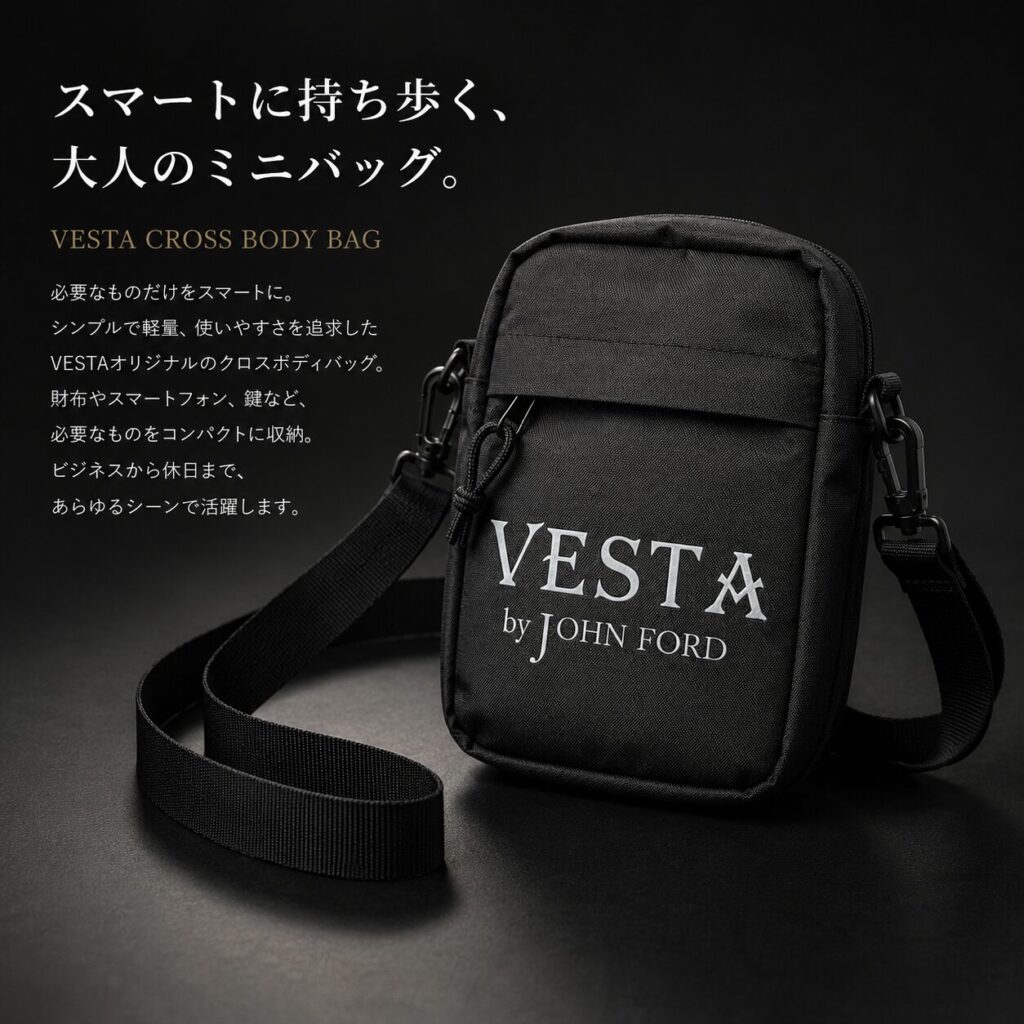
そこで、普段テーラーを訪れる機会のない方にも、VESTAのものづくりや価値観に触れていただきたいという想いから、「VESTA Everyday Crossbody Bag」を企画しました。
VESTA Everyday Crossbody Bagとは
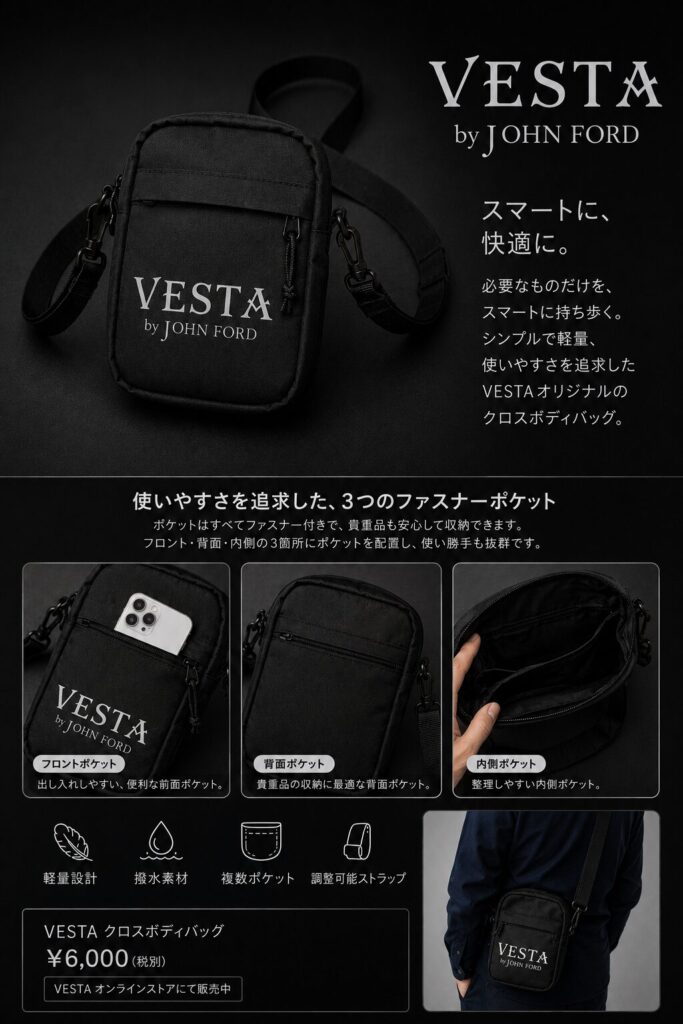
VESTA Everyday Crossbody Bagは、財布、スマートフォン、鍵、カードケース、パスポートなど、日常に必要なものをコンパクトに持ち歩けるクロスボディバッグです。
主な特徴は次のとおりです。
- フロント、背面、内側に3つのファスナーポケット
- 貴重品を分けて収納しやすい構造
- 軽量で撥水性のある素材
- スーツにもカジュアルにも合わせやすいデザイン
- 旅行や休日の外出にも便利なサイズ
コンパクトでありながら収納場所が分かれているため、鍵やスマートフォン、貴重品を整理して持ち運べます。
「必要なものだけでなく、日本の仕立て文化の未来も持ち歩く」
そんな想いを込めた、VESTAの日常的なアイテムです。
VESTA Everyday Crossbody Bagの詳細・ご購入はこちら
良いものを長く使うことが、日本の技術を未来へつなぐ
大量につくり、大量に捨てる時代から、必要なものを丁寧につくり、長く使う時代へ。
世界のファッション産業は、少しずつ方向を変え始めています。
その一方で、日本国内では服をつくる工場や職人が減り、国産衣料品の割合はわずか1.1%にまで低下しています。
VESTAのようなテーラーは、確かに絶滅危惧種かもしれません。
しかし、イタリアの感性、日本の手仕事、天然素材の芯地、手裁断・手縫いによる立体的な仕立ては、短期間で代替できるものではありません。
私たちは、これからも一着一着を丁寧に仕立て、日本のテーラリング技術を未来へつないでまいります。
まだVESTAのスーツやコートを体験されたことのない方は、ぜひ銀座店へお越しください。
すぐにスーツを必要とされない方も、VESTAのブログ、YouTube、そしてEveryday Crossbody Bagを通じて、私たちのものづくりに触れていただけましたら幸いです。
関連リンク
- フランスのファッション産業と衣料品廃棄をめぐる記事
- 「Made in Japan」が消えていく未来——国産衣料は過去最低
- 2026 VESTA秋冬コート先行オーダーフェア
- VESTA Everyday Crossbody Bag
一着を長く愛用するための、VESTAのオーダー
VESTAでは、単に身体の寸法に合わせるだけではなく、着用される場面、お仕事、お好み、目指したい印象まで丁寧に伺いながら、一着をご提案しています。
世界各国の上質な生地から、お客様の用途にふさわしい一枚を選び、天然素材を中心とした本バス毛芯を使用。日本の職人が手裁断・手縫いの工程を重ね、身体を美しく見せながら、長時間着ても疲れにくい立体的なスーツへと仕立てます。
オーダースーツの知識がなくても、ご心配はいりません。
「どのような場面で着たいのか」「周囲にどのような印象を与えたいのか」をお聞かせください。生地選びからデザイン、フィッティングまで、経験豊富なスタッフが一緒に考えます。
大量につくられた服を短期間で買い替えるのではなく、自分のためにつくられた一着を、調整や修理をしながら長く着る。
VESTAのイタリアの感性と日本の手仕事を、ぜひ銀座でご体験ください。
まだVESTAでオーダーされたことのない方も、どうぞお気軽にご相談ください。皆様のご来店をお待ちしております。
▼ご相談:VESTA公式LINE
https://lin.ee/SgLnq8Y
VESTA by John Ford
国際基準のドレスプロトコルと、日本の手仕事を融合した銀座のテーラリング。
ご予約・ご相談は公式LINE・WEBより承っております。
▼ご来店ご予約
https://vestayoyaku.youcanbook.me/
▼Instagramアカウント移行のお知らせ
この度、旧アカウント凍結に伴い、VESTA公式Instagramを新しくしております。
ぜひ新アカウントのフォローをお願いいたします!
https://www.instagram.com/vestabyjohnford
この記事をヴェスタのYoutube動画でお話ししています
Just 1.1% of Clothing Sold in Japan Is Made Domestically — Is VESTA’s Bespoke Tailoring an Endangered Craft?
“People no longer wear suits, especially in summer.”
We have been hearing this for many years.
And yet, at VESTA, a bespoke tailor in Ginza, orders placed during our 2026 Summer Coat Fair are currently running at approximately three times the level recorded during the same period last year.
Among the most popular pieces are VESTA’s long-standing signature designs: the fully handmade mantle, the women’s cape and the Inverness coat.
At the same time, the global fashion industry is beginning to reconsider a business model built around mass production, mass consumption and mass disposal.
In Japan, it has also been reported that domestically produced garments now account for just 1.1% of the clothing supplied to the Japanese market.
Tailors such as VESTA — where fabrics are selected individually, natural materials are used in the internal canvas, garments are hand-cut and largely hand-sewn, and production takes place in Japan — may now be something of an endangered species.
However, as the world begins to value producing only what is needed and using garments for longer, this traditional approach to clothing may, in fact, have come full circle to become one of the most forward-looking models in fashion.
The Future Belongs to Clothes Made to Last
At VESTA, we believe the following values will become increasingly important in the future of fashion:
- Producing only what is genuinely needed
- Making clothing for the individual wearer
- Repairing and adjusting garments so they can be used for many years
- Ensuring transparency regarding materials and production methods
- Passing specialist craftsmanship on to the next generation
A bespoke suit is made from the outset for one particular customer.
Because it is produced only after an order has been placed, there is no need to manufacture large amounts of unsold stock. The garment is made for the wearer’s body, lifestyle and purpose, making it easier to wear and more suitable for long-term use through repairs and size adjustments.
Bespoke tailoring is not a new system.
However, as mass production and clothing waste become increasingly urgent global concerns, its value is being reconsidered.
France Moves to Address Mass Production and Clothing Waste
France, one of the world’s most influential fashion capitals, has been introducing measures intended to reduce overproduction and the disposal of clothing.
Many unsold garments remain perfectly wearable and have no quality defects.
Nevertheless, clothes have historically been discarded because a season has ended, a trend has changed or a company wishes to protect the perceived value of its brand.
France is now developing regulations that require companies, and not only consumers, to reconsider this structure of mass production, mass consumption and mass disposal.
This is no longer simply a matter of encouraging individuals to “make environmentally conscious choices.”
The country is attempting to change the broader fashion system, including how much clothing is produced, how it is sold and what happens to merchandise that remains unsold.
Reference Article
Developments in France’s Fashion Industry and the Disposal of Unsold Clothing | Yahoo! News Expert
When we look at this global shift, it may prove to be a tailwind for bespoke tailors such as VESTA.
After all, we have never built our business around producing large quantities of clothing and then attempting to sell them.
The “Inefficient” Way VESTA Has Always Made Clothes
At VESTA, we begin by speaking with each customer and selecting a fabric that suits their needs, preferences and intended use.
We take detailed measurements and examine the customer’s posture and body shape before adjusting the pattern.
The fabric is then cut individually, and natural materials are used within the garment to create a three-dimensional structure around the body.
The principal characteristics of VESTA tailoring include:
| Category | VESTA’s Approach |
|---|---|
| Production method | Each garment is made only after an individual order is placed |
| Fabrics | Selected from high-quality Italian, British and international cloth collections |
| Internal canvas | Natural materials, including a specially commissioned Italian full horsehair canvas |
| Construction | Approximately 70% hand-cutting and hand-sewing processes |
| Place of production | Made in Japan |
| Design | Adjusted for the wearer’s body shape, posture, purpose and preferences |
| Long-term use | Garments can be repaired and altered over time |
To be entirely honest, this is not the most efficient way to make clothing.
Each garment takes time to complete, and mass production is impossible.
Cutting, canvas construction, pressing and sewing all require experienced craftspeople with highly specialised skills.
There are easier ways to make a suit if speed and price are the only priorities.
Nevertheless, VESTA continues to work in this way because we believe in the structure, comfort and durability created through handwork and a naturally constructed canvas.
The Reality: Around 99% of Clothing Sold in Japan Is Made Overseas
While France is attempting to address overproduction and clothing waste, Japan is facing a different but related problem.
The country is rapidly losing its domestic capacity to manufacture clothing.
According to an article published by Yahoo! News Expert, citing data from the Japan Textiles Importers Association, approximately 3.7 billion garments were supplied to the Japanese market in 2025.
Only 1.1% of them were made in Japan.
In other words, approximately 99% of clothing supplied in Japan is now manufactured overseas.
The article also reports that domestic garment production has fallen to around half the level recorded ten years ago.
Reference Article
This does not mean that clothing made overseas is inherently inferior.
There are outstanding factories and craftspeople throughout the world, and VESTA itself uses exceptional fabrics from Italy, Britain and other international textile-producing regions.
The real concern is that Japan’s own sewing factories, skilled workers and garment-making infrastructure are disappearing.
Once a factory closes, a craftsperson retires or the transmission of specialist knowledge is interrupted, the capability cannot simply be restored the moment it is needed again.
Hand-sewing, hand-cutting and creating a sculpted garment using a traditional canvas cannot be mastered by reading a manual.
These abilities are developed over many years through practical experience, understanding the character of different materials, making mistakes and learning how to correct them.
“Made in Japan” Is Not the Only Measure of Quality
VESTA does not believe that attaching a “Made in Japan” label is, by itself, enough to guarantee value.
We believe the real strength lies in combining outstanding international materials and sensibilities with the precision and care of Japanese craftsmanship.
VESTA suits and coats bring together the softness and elegance associated with Italian tailoring and the exacting attention to detail of Japanese makers.
The value of a garment is not determined solely by where the fabric was woven or where the sewing took place.
Its true value comes from the complete story: who it was made for, how it was constructed, which materials were used and how long it can be worn.
Could an Endangered Tailoring Tradition Become Fashion’s Next Frontier?
Very few tailoring houses now select fabric for each individual garment, use natural canvas materials, incorporate extensive hand-sewing and produce their clothing domestically in Japan.
To put it somewhat self-deprecatingly, VESTA may be an endangered species within the tailoring world.
Yet attitudes are beginning to change.
Practices once dismissed as slow, inefficient and unsuitable for mass production are now being reconsidered for entirely different reasons:
- They avoid unnecessary production
- They encourage customers to wear one garment for many years
- They allow clothing to be repaired rather than discarded
- They make the people behind the product visible
- They help preserve regional skills and employment
- They are not entirely dependent on short-lived trends
Traditional tailoring may be endangered, but it may also have come full circle to become one of the most relevant models for the future of fashion.
Why Order a Coat During Summer?
VESTA is currently holding its 2026 Autumn/Winter Early Order Coat Fair.
Some customers naturally ask why they should order a coat in the middle of summer.
VESTA’s signature mantles, women’s capes and Inverness coats are very different from ordinary ready-to-wear outerwear.
They require generous quantities of fabric, specialist technical knowledge and a considerable amount of production time.
When an order is placed only after the weather has turned cold, the finished garment may not be ready in time for the main winter season.
Selecting the fabric and design during summer allows customers to receive and enjoy their coat from the beginning of winter.
The following styles have been especially popular during the 2026 Coat Fair.
VESTA Signature Mantle
A fully handmade VESTA signature piece, created from a generous amount of cloth and distinguished by the elegant drape that flows from the shoulders to the hem.
Discover the VESTA Signature Mantle
Women’s Cape
A beautifully shaped cape that wraps gracefully around the shoulders and pairs easily with dresses, suits and one-piece outfits.
Discover the VESTA Women’s Cape
Inverness Coat
A classic design combining a layered cape structure with warmth and contemporary practicality. VESTA also offers models with a detachable cape.
Discover the VESTA Inverness Coat
Orders placed during the fair, from July 4 to August 31, 2026, are available at current prices before the forthcoming price revision.
Delivery is scheduled for early November.
View Details of the 2026 VESTA Autumn/Winter Early Order Coat Fair
Bringing VESTA Into Everyday Life — Even When You Do Not Need a Suit
Many visitors come to the VESTA website not only to order a suit, but also to learn about menswear, fabrics, tailoring, styling and international dress codes.
We intend to continue developing the website not merely as a place to sell products, but also as an information resource for those interested in Japanese tailoring culture and the wider world of fashion.
At the same time, we understand that not everyone who is interested in VESTA needs a new suit at this particular moment.
There is no reason to order a new suit every year.
For this reason, we created the VESTA Everyday Crossbody Bag, allowing people who may not regularly visit a tailor to experience VESTA’s values in a more accessible, everyday form.
Click the image to visit the product page.
What Is the VESTA Everyday Crossbody Bag?
The VESTA Everyday Crossbody Bag is a compact bag designed to carry everyday essentials such as a wallet, smartphone, keys, card holder and passport.
Its principal features include:
- Three zipped compartments on the front, back and inside
- Separate storage for valuables and frequently used items
- A lightweight, water-resistant material
- A design that works with both tailoring and casual clothing
- A practical size for travel, shopping and days off
Although compact, the bag’s separate compartments make it easy to organise a smartphone, keys and other valuables.
It was created with the idea of carrying not only daily essentials, but also the future of Japanese tailoring culture.
View and Purchase the VESTA Everyday Crossbody Bag
Using Better Things for Longer Helps Preserve Japan’s Skills
The fashion industry is slowly moving away from an era of producing and discarding enormous quantities of clothing and toward one in which necessary items are made carefully and used for longer.
Meanwhile, Japan’s domestic garment factories and skilled craftspeople continue to decline, with Japanese-made clothing accounting for just 1.1% of domestic supply.
A tailor such as VESTA may indeed be an endangered species.
However, Italian sensibility, Japanese craftsmanship, natural canvas materials and the sculpted structure created by hand-cutting and hand-sewing cannot be replaced overnight.
VESTA will continue to make every garment with care and work to pass the techniques of Japanese tailoring on to the future.
Those who have not yet experienced a VESTA suit or coat are warmly invited to visit us in Ginza.
Those who do not currently need a suit can still discover our approach to craftsmanship through the VESTA blog, YouTube channel and Everyday Crossbody Bag.
Click the image to visit the product page.
Related Links
- Developments in France’s Fashion Industry and Clothing Waste
- The Disappearing Future of “Made in Japan”
- 2026 VESTA Autumn/Winter Early Order Coat Fair
- VESTA Everyday Crossbody Bag
A VESTA Garment, Made to Be Worn for Years
At VESTA, bespoke tailoring means far more than simply matching a garment to a customer’s measurements.
We take the time to understand where the garment will be worn, the nature of the customer’s work, personal preferences and the impression they wish to create.
From an international selection of exceptional fabrics, we recommend a cloth suited to each customer’s purpose.
Using a naturally constructed full canvas, our Japanese craftspeople then undertake extensive hand-cutting and hand-sewing processes to create a three-dimensional garment that enhances the wearer’s appearance while remaining comfortable over long periods.
No previous knowledge of bespoke tailoring is required.
Simply tell us where you intend to wear the garment and how you would like to be perceived. Our experienced team will guide you through the fabric, design and fitting process.
Rather than repeatedly replacing mass-produced clothing, bespoke tailoring offers the opportunity to own a garment made specifically for you — one that can be adjusted, repaired and worn for many years.
We invite you to experience VESTA’s combination of Italian sensibility and Japanese craftsmanship in Ginza.
Those visiting VESTA for the first time are always welcome to contact us for an initial consultation.
Contact VESTA via Official LINE
VESTA by John Ford
Ginza tailoring that combines internationally recognised dress protocols with Japanese craftsmanship.
Appointments and consultations are available through our official LINE account and online booking page.
Book an Appointment
https://vestayoyaku.youcanbook.me
VESTA’s New Official Instagram Account
Following the suspension of our previous account, VESTA has launched a new official Instagram account.
We would be delighted to welcome you as a follower.